
What Happens If a Guest Gets Seasick on a Charter?
What if seasickness doesn’t have to ruin the day? If you’re wondering what happens if a guest gets seasick on a charter, early signs can include queasiness, dizziness, or a cold sweat. The most helpful first step is to tell the captain or crew as soon as discomfort starts, rather than trying to hide it or wait for it to pass.
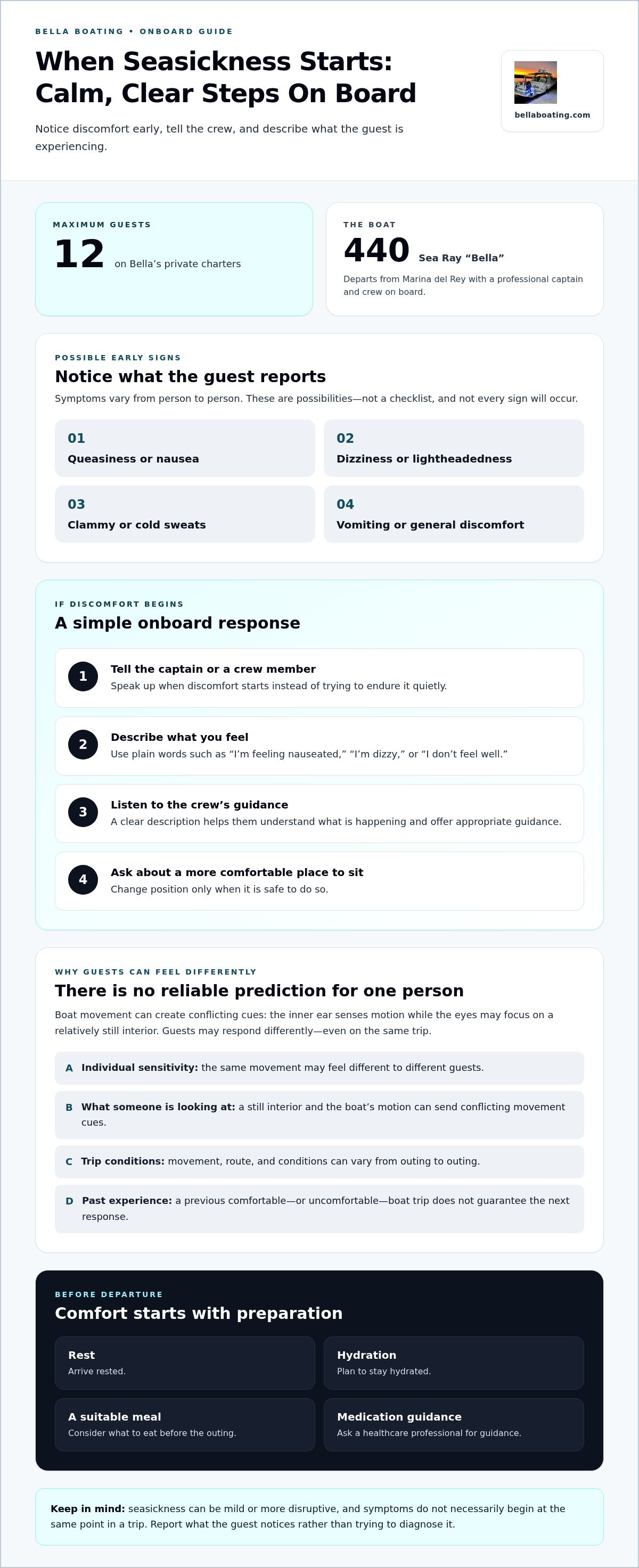
It’s understandable to worry about feeling unwell away from shore, especially when you want everyone in your group to enjoy the outing. On a private charter aboard the Sea Ray 440 “Bella,” a professional captain and crew are on board. Let them know what the guest is experiencing so they can understand the situation and offer appropriate guidance.
This guide covers common signs of seasickness, practical steps to take when symptoms begin, and ways to prepare before departure. It also explains what to share with the captain or crew and what to consider when deciding whether a charter from Marina del Rey is a comfortable fit for your group.
Table of Contents
What happens when a guest gets seasick on a charter?
It’s understandable to wonder what happens if a guest gets seasick on a charter, especially once the group is out on the water. Symptoms can arise during a trip, and guests may respond differently: one person may feel comfortable while another notices nausea or dizziness. Discomfort may be mild or more disruptive. It isn’t a reflection of how well someone planned or how much they want to enjoy the outing.
Seasickness is motion sickness associated with the body and brain receiving conflicting cues about movement. For example, the inner ear senses the boat’s motion while a person’s eyes may be focused on a relatively still interior. That mismatch can contribute to nausea, dizziness, sweating, or vomiting, though no one symptom is inevitable. The Motion Sickness on Wikipedia overview offers further background on the causes and range of experiences.
What seasickness may feel like
Guests may describe a queasy stomach, lightheadedness, clammy or cold sweats, or a general sense that something feels off. These are possible signs, not a checklist, and they vary from person to person. Symptoms may be mild or more pronounced, and they don’t necessarily begin at the same point in a trip.
Pay attention to what the person reports rather than trying to label or diagnose the experience. One guest might mention nausea without dizziness; another may simply seem unusually uncomfortable. A clear description gives the captain or crew useful context if the guest needs support.
Why a boat’s motion can affect guests differently
Two people can share the same space and experience the boat’s movement differently. Individual sensitivity and where someone is looking can affect their comfort. Even a person who has spent time on boats before may feel unwell on a particular outing, while a first-time guest may feel fine.
Prior boating experience isn’t a guarantee either way. A departure from Marina del Rey can’t predict how any guest will feel. Conditions and the experience of movement vary, so don’t assume a particular trip will be calm or rough in advance.
When someone says they’re beginning to feel unwell, take the report seriously without creating alarm. Guests may need different kinds of support, so the next useful step is to explain what they’re experiencing. A simple, specific description, such as “I’m feeling nauseated” or “I’m dizzy,” is more helpful than waiting until the discomfort becomes difficult to explain.
Why guests can feel seasick on a private boat charter
Understanding why motion affects people differently can make seasickness feel less mysterious. On a private boat charter, comfort may be influenced by the vessel’s movement, a guest’s individual sensitivity, and conditions during the outing. An ocean-facing trip from Marina del Rey is part of the experience, but it doesn’t mean every guest will feel the same.
Motion sickness is associated with conflicting signals about movement, and a boat is a changing environment rather than a fixed point of reference. The Mayo Clinic on Motion Sickness explains how motion can contribute to symptoms and why people’s responses vary. These general factors can help explain discomfort, but they can’t predict how one person will feel on a particular charter.
Why the same trip may feel different to different people
People don’t all perceive or respond to movement in the same way. A motion that barely registers for one guest may feel unsettling to another. This isn’t a matter of toughness, attitude, or boating skill. Even companions sharing the same view and surroundings can have different comfort levels.
Previous experience offers no guarantee. Someone who felt well on a past boat trip may feel differently on the next one, while a guest with little time aboard may be comfortable. Treat each outing as its own experience rather than assuming a person will react as they did before.
Why trip conditions are not the same every time
Water movement and a guest’s comfort can vary from outing to outing. The vessel’s motion, route, and conditions encountered during a trip may all contribute, but they don’t reliably predict an individual’s response. Charter duration and itinerary can differ too; a longer or shorter trip doesn’t guarantee that symptoms will or won’t occur.
On a private charter departing from Marina del Rey, don’t assume a particular sea state or level of comfort in advance. Guests with questions about the outing can speak with the captain, the onboard point of contact for route- or trip-related information. This helps separate practical questions about the charter from guesses about how someone’s body might respond.
So, what happens if a guest gets seasick on a charter can’t be predicted from experience, itinerary, or conditions alone. These are possible contributing factors, not a diagnosis or a forecast for one person. If you’re considering an outing from Marina del Rey, explore private Marina del Rey charters to picture the setting and plan with your group in mind.
What to do if seasickness starts during the charter
If you or someone in your group starts feeling unwell, speak up. Early, clear communication helps the captain or crew understand what’s happening and offer guidance. There’s no need to diagnose the cause or wait until discomfort feels overwhelming. Explain how you feel, listen to the crew, and change position only when it’s safe to do so.
Use this calm sequence:
Tell the captain or a crew member. Let them know as soon as you notice discomfort, rather than trying to endure it quietly.
Describe what you’re experiencing. Say plainly, for example, “I’m feeling nauseated,” “I’m dizzy,” or “I don’t feel well.” Stick to what you notice instead of guessing at a diagnosis.
Ask where to position yourself. The crew can advise whether there’s a more comfortable or appropriate place to sit or stand. Follow their direction and avoid moving around the vessel without considering safety.
Follow the crew’s instructions. If you’re unsure what to do next, ask. Don’t assume the charter will change course, stop, or return early. Those decisions shouldn’t be taken for granted.
Tell the captain or crew as soon as you feel unwell
It can feel awkward to interrupt a special outing, but telling the crew is more useful than silently enduring symptoms. A short, direct description helps them understand what the guest is experiencing without requiring medical terminology. If you’re speaking on someone else’s behalf, share what they’ve told you and let them explain further if they’re able.
Try simple comfort measures while following crew guidance
If it’s appropriate and safe, getting fresh air or looking toward the horizon may feel more comfortable for some guests, but neither is a guaranteed remedy. Ask before changing position, especially if moving around feels difficult. Taking small sips of water may also be a simple comfort measure. Bottled water is included aboard Bella.
Keep checking in with the person rather than assuming one measure has solved the problem. A guest might prefer to stay where they are or need the crew’s advice before moving elsewhere. Avoid insisting on a particular seat or remedy, since comfort varies from person to person.
Severe or rapidly worsening symptoms call for prompt attention. Tell the captain or crew immediately and seek medical attention promptly. Don’t treat a serious change in someone’s condition as ordinary seasickness or rely on general comfort measures in place of professional care. This article can’t assess an individual’s symptoms; if you’re concerned about someone’s health, get appropriate medical help.
How to prepare for a more comfortable charter
A little planning can help you enjoy time on the water, particularly if you or someone in your group has felt motion sick before. This principle holds true across all maritime activities, whether embarking on a coastal yacht cruise or heading offshore for water excursions with operators like Diving Around Hurghada. Preparation can’t promise that symptoms won’t occur, but it can help guests make informed choices and feel ready to speak up if they begin to feel unwell. Think about comfort before departure, not just once you’re aboard.
Use this checklist as a starting point, adapting it to what you already know works for you:
Get adequate rest. Build in time to arrive without rushing, and avoid setting out already tired if you can.
Choose food that suits you. Have a comfortable meal and avoid foods you know tend to leave you feeling unwell.
Stay normally hydrated. Drink fluids as you ordinarily would, without forcing yourself to consume more than feels right.
Share relevant concerns. If you’re prone to motion sickness, let your group and the crew know before departure so they understand your concern.
Food, rest, and hydration before departure
There’s no single meal or routine that suits everyone. Choose familiar foods that feel comfortable for you rather than making a last-minute change based on someone else’s advice. Arriving rested and keeping up with your usual hydration are sensible preparation steps, not guarantees against seasickness. If a particular food or habit has made you feel uncomfortable on past trips, take that experience into account.
Medication and personal health considerations
If you’re considering medication, speak with a qualified healthcare professional about whether it’s appropriate for you, possible side effects, and when to use it. Follow the product’s directions, and consider whether drowsiness could affect your plans or participation in the outing. Don’t rely on general travel advice to choose a medicine or schedule that may not suit your health needs.
Planning also means making it easy to ask for help without feeling self-conscious. A guest who has experienced seasickness before can tell companions and the crew in advance. That doesn’t require predicting how the trip will feel; it gives the group a shared understanding that comfort may need attention. If symptoms start, tell the captain or crew and follow their guidance.
Preparation may support comfort, but it can’t guarantee a symptom-free trip. Individual responses vary, and sensible planning is not a substitute for medical advice. A calm plan helps you focus on the outing while staying attentive to how you feel.
Planning a private outing with your group? Explore Bella Boating charter experiences as you consider what will make the day comfortable for everyone.
What to expect if seasickness is a concern on Bella
A concern about motion sickness doesn’t have to be the only thing you consider when planning an outing. Knowing the departure point, who’s aboard, and the vessel’s safety credentials gives your group a clearer picture of the experience. Keep expectations realistic: no boat or credential can guarantee that every guest will feel comfortable throughout a trip.
A private charter aboard the Sea Ray 440 “Bella”
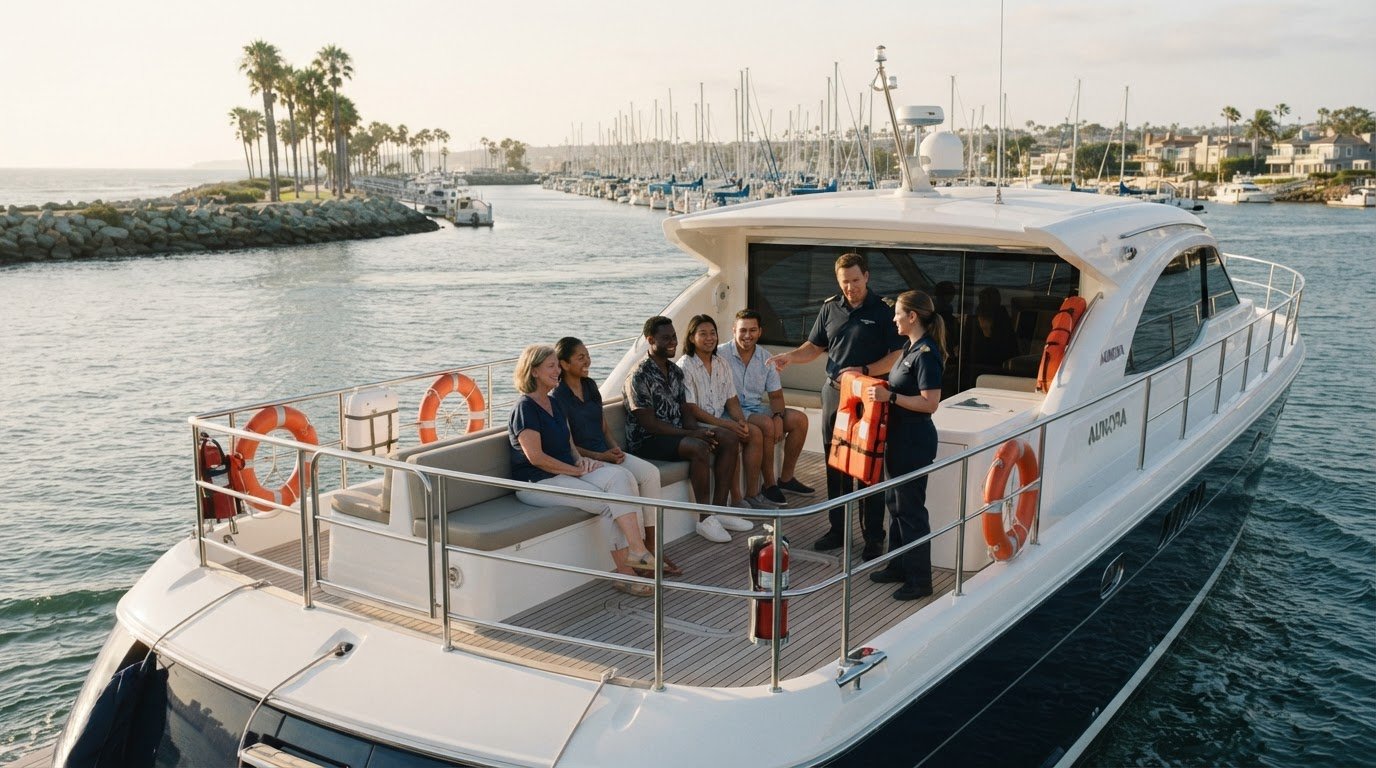
Bella’s private charters depart from Dock 55 at Fisherman’s Village in Marina del Rey aboard the Sea Ray 440 “Bella.” A professional captain and crew are included, and the vessel accommodates a maximum of 12 guests. Knowing where the charter begins and who will be aboard can help a group plan together and raise comfort concerns early.
The vessel is approved by LA County and the US Coast Guard, and is examined by the US Coast Guard annually to ensure compliance and safety. These are meaningful safety credentials, but they don’t prevent motion sickness, predict sea conditions, or promise a particular outcome if a guest feels unwell. If a concern comes up during the outing, tell the captain or crew and follow their guidance.
Plan your Marina del Rey outing with clear expectations
As you decide whether a private charter fits your group, consider each guest’s comfort, the occasion, and how you’ll communicate if someone begins to feel unwell. A guest who has experienced motion sickness before may want to prepare in advance and let companions know what support would feel helpful. That conversation is practical, not a prediction that symptoms will occur. For travelers planning broader adventures or international excursions, coordinating with a dedicated trip planner such as City Rise Tourism can also help ensure every outing is structured with guest comfort in mind.
For more context about the local setting and planning, Bella Boating’s private boat rental guide for Los Angeles and guide to a luxury yacht charter rental offer ideas for shaping an outing. Reading about the experience can help your group think through what matters without assuming that trip conditions or individual comfort can be predicted in advance.
If you’re still weighing what happens if a guest gets seasick on a charter, remember that preparation and communication are sensible steps, not guarantees. Explore Bella’s charter experience and share your plans with the team, including any comfort considerations your group would like to raise. Clear expectations can help you make an informed choice about time together on the water.
Plan your time on the water with confidence
Knowing what happens if a guest gets seasick on a charter can help you plan thoughtfully, but no preparation can predict exactly how each person will feel. If motion sickness is a concern for someone in your group, include their comfort in the conversation as you decide whether an outing feels right. Clear expectations and a willingness to speak up can help everyone approach the day with greater ease.
Bella’s charters include a professional captain and crew. The vessel is approved by LA County and the US Coast Guard, and is examined by the US Coast Guard annually to ensure compliance and safety. These credentials reflect attention to vessel safety, not protection from seasickness or a guaranteed response to symptoms.
When you’re ready to picture your outing, explore a private charter aboard Bella in Marina del Rey and share your plans with the team. A considered start can help your group look forward to its time on the water with calm, realistic expectations.
Frequently Asked Questions
Can seasickness start after a charter has already begun?
Yes, seasickness can begin after a boat trip is underway, and it may not be obvious at departure that someone will feel unwell later. If you’re wondering what happens if a guest gets seasick on a charter, tell the captain or crew when symptoms first appear rather than waiting for them to worsen. Feeling fine at the dock doesn’t guarantee that a guest will feel the same throughout the outing.
Does getting seasick mean the charter has to end?
No, a guest feeling seasick doesn’t automatically mean the charter must end. Let the captain know what’s happening and follow the crew’s guidance. Whether the outing can continue depends on the circumstances and the guest’s condition. Don’t assume the vessel will change course, stop, or return early. If symptoms are severe or worsening, prioritize getting appropriate medical attention rather than focusing on the planned itinerary.
Can someone get seasick even if they have never felt motion sick before?
Yes. Someone who has never felt motion sick before can still feel unwell on a boat, and a comfortable past trip can’t guarantee the same experience next time. There’s no need to blame the guest or assume they did something wrong. They can describe what they’re feeling, such as nausea or dizziness, and let the captain or crew know so they can follow appropriate guidance.
Should I take seasickness medicine before a boat charter?
Whether to use medication depends on the individual. Before a Marina del Rey charter, ask a qualified healthcare professional whether motion-sickness medicine is suitable for you, how to use it, and what side effects to consider. Follow the product label and ask whether drowsiness could affect your plans. Don’t take someone else’s medication or rely on a general recommendation instead of advice tailored to your health.
Can children get seasick on a private charter?
Yes, children can experience motion sickness too, although a child may describe it differently or have trouble explaining what feels wrong. Bella welcomes guests of all ages on its private charters from Marina del Rey. Watch for a child saying they feel queasy, becoming unusually quiet, or seeming uncomfortable, and tell the crew. For medication questions, speak with the child’s healthcare professional and follow age-appropriate product directions.
When should seasickness symptoms be treated as urgent?
Seek prompt medical attention if symptoms are severe, rapidly worsening, or seem unusual for the person, rather than assuming they’re ordinary motion sickness. Tell the captain or crew right away and describe the changes you’ve noticed as clearly as possible. If you’re unsure whether symptoms are urgent, err on the side of getting medical advice. General comfort measures aren’t a substitute for professional care.


Comments